Sustainable Metal Packaging: A Practical Guide for Packaging Buyers
Sustainable metal packaging is no longer a niche request from a handful of eco-focused brands. It now appears in tenders, retail supplier questionnaires and regulatory filings. For buyers of aluminum tins, jars and caps, the practical question is not whether metal is recyclable in principle, but how much of that recyclability survives your specific specification.
Performance depends on alloy choice, recycled content, wall thickness, closure design and the collection infrastructure in the market where your product is sold. This guide covers the levers you can actually put into a purchase order.
Why Aluminum Leads on Circularity
Aluminum is one of very few packaging materials that can be recycled repeatedly without losing its functional properties. It does not degrade into a lower-grade material after one or two cycles, and its scrap carries genuine market value, which funds collection and sorting.
- Recycling aluminum uses roughly 95% less energy than producing primary metal from bauxite.
- Around three-quarters of all aluminum ever produced is still in use in some form.
- Rigid metal is easy for sorting equipment to separate, unlike multi-material laminates.
For food, cosmetic, candle and supplement brands, the outcome is a container that stays a container after use rather than becoming residue.
Recycled Content: Specifying PCR and PIR Correctly
Post-consumer recycled (PCR) content is the metric most retailers and regulators now ask for. Post-industrial recycled (PIR) material is easier to source but is weighted differently in most reporting frameworks, so the distinction matters. Ask your supplier for a specific figure and the documentation behind it.
Questions worth asking
- What percentage of post-consumer recycled content is in the alloy, and is it verified by a third party?
- Does the recycled grade meet food-contact requirements, including traceability of the scrap stream?
- How does higher PCR content affect price, lead time and minimum order quantity?
One caution: recycled content does not automatically reduce cost. Scrap prices track the LME closely, and clean, food-grade recycled aluminum often carries a premium over primary metal.
Lightweighting Without Losing Performance
Reducing material per unit is the most direct way to cut embodied carbon, and it also lowers freight weight. But downgauging has limits. Push wall thickness too far and you get dents in transit, seam failures, poor stacking strength and lid fit problems that generate returns.
Where weight can realistically be cut
- Body wall thickness tuned to actual fill weight and stacking load, not a legacy specification
- Lid gauge matched to the sealing method, whether crimped, seamed or friction-fit
- Neck-in, beads and ribs used to restore rigidity where material has been removed
Freight is often the overlooked win here. A lighter tin means more units per pallet and per container, which reduces emissions per finished product when exporting.
Mono-Material Design and Closures
Sorting systems work by material. A metal body with a plastic cap is not a disaster, but every additional material makes separation harder and can affect recyclability scoring and eco-modulated fees.
- Use aluminum lids or caps wherever the product allows.
- If plastic is unavoidable, specify a single polymer, typically PP, and keep it easy to remove by hand.
- Avoid glued-on labels, metallised film windows and mixed-material inserts that contaminate the metal stream.
Our aluminum jars and threaded caps are produced to matched alloys and tolerances so end users can separate components without tools.
Reuse, Refill and Premium Perception
Durability is a sustainability feature. Aluminum tins hold their shape, resist corrosion when correctly lacquered and take decorative finishing well, which makes them credible as keep-forever containers. Refill and return models work best for candles, balms, dry teas and spices, where the container is part of the product experience.
Designing for reuse means thicker walls, coatings that survive repeated handling, and lids that reseal reliably over many cycles. Internal lacquers must remain compliant with food-contact rules throughout the intended service life, not just on first fill.
Regulation and Reporting
The EU Packaging and Packaging Waste Regulation is reshaping design requirements, and even exporters outside Europe feel it because retail customers pass the requirements down the supply chain.
- Recyclability-by-design criteria that rule out certain mixed constructions
- Recycled content minimums for metal packaging, rising in stages
- Extended producer responsibility fees adjusted by recyclability
- Carbon and material declarations requested in supplier questionnaires
Keeping material declarations, migration test reports and recycled content certificates on file makes these requests routine rather than a scramble.
Claims You Can Defend
Broad phrases such as fully eco-friendly are vague and increasingly risky. Under recognised environmental marketing standards, specific and quantified claims are far safer: made with a stated percentage of post-consumer recycled aluminum, recyclable where aluminum collection exists, and mono-material body and lid. Keep every claim traceable to a document you can send a customer.
Sourcing Checklist
- Recycled content percentage, type and verification
- Alloy and temper suitability for your product, including acidic or oily fills
- Internal lacquer compliance for food contact in your destination market
- Wall and lid gauge versus fill weight, stacking and transit conditions
- Closure type: aluminum or single-polymer, and ease of separation
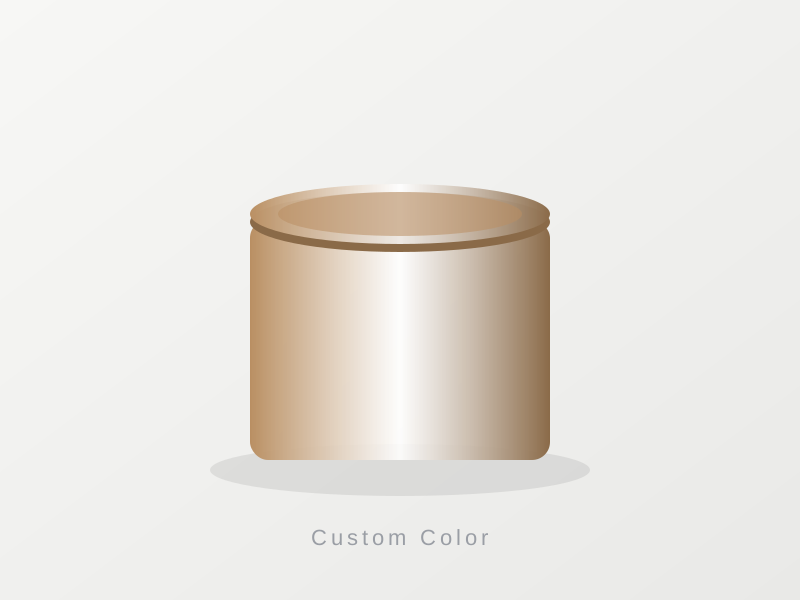
- Custom color finishing that does not interfere with end-of-life recycling
- Packing efficiency and units per container load
- Documentation pack: material declarations, certificates, migration reports
If you are specifying sustainable metal packaging for a new line or reworking an existing one, send us your dimensions, fill weight, target market and finish requirements. We manufacture aluminum tins, jars, caps and custom color series for export and will come back with a specification and quote, including recycled content options and samples for testing.